

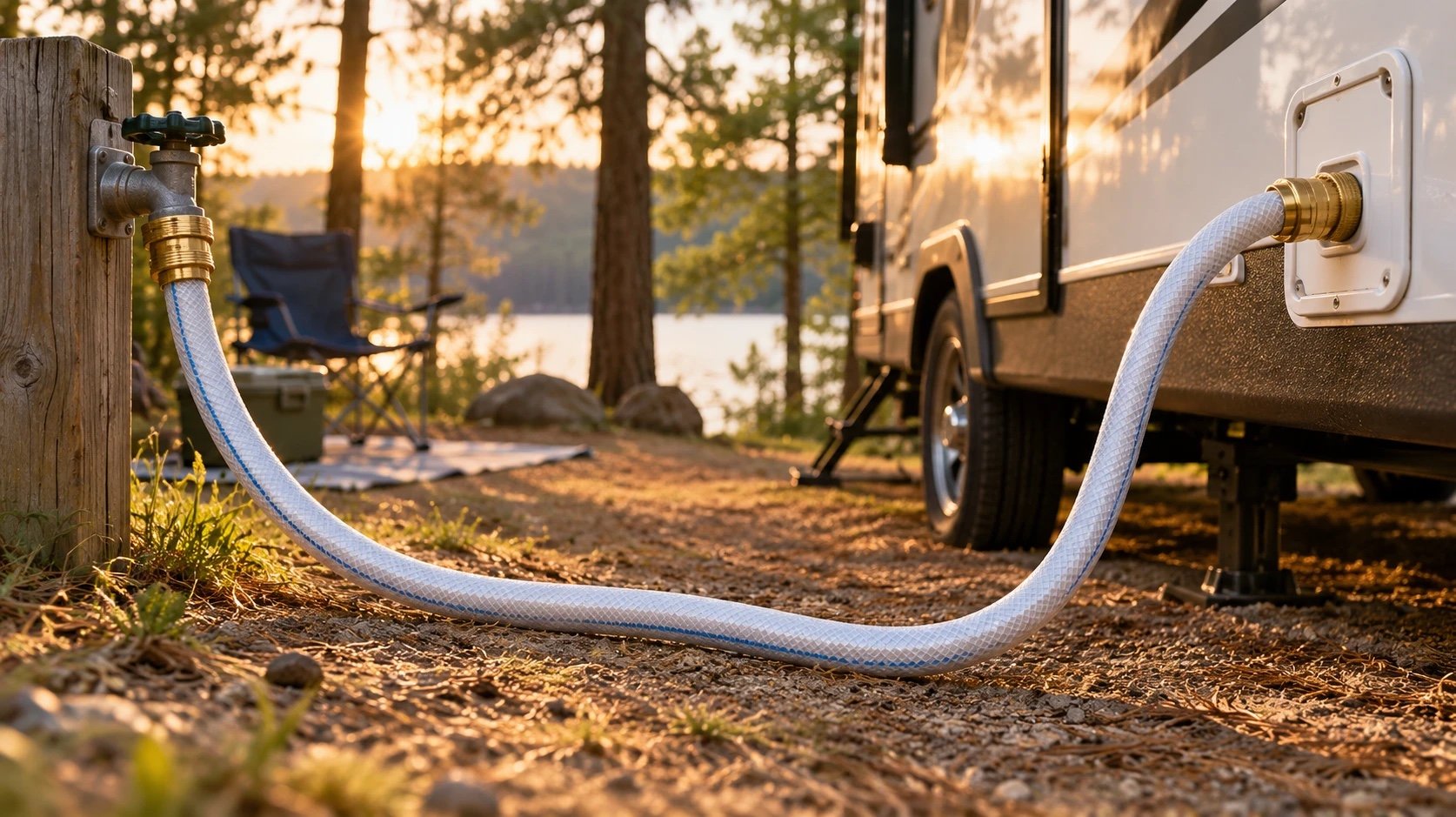
If you are gearing up for a road trip in your RV, you probably have a checklist for tires, propane, and supplies. One item that often gets overlooked is the hose you use to fill your fresh water tank. That hose carries the water you drink, cook with, and brush your teeth with, so it deserves as much attention as anything else on your list. Here is how to tell whether your RV hose is safe to drink from and how to keep your fresh water system clean on the road.
Not Every Hose Is Made for Drinking Water
A standard garden hose is designed for watering plants, not for carrying water you will drink. Hoses that are not made for drinking water may use materials that can affect the taste and quality of the water passing through them, especially after sitting in the sun. When you shop for an RV hose, look for one that is clearly labeled as drinking water safe.
Apex RV and marine hoses are made for this job. NeverKink RV/Marine White and NeverKink RV/Marine Blue are drinking water safe, manufactured with FDA-sanctioned materials, and lead-safe in compliance with the Consumer Product Safety Improvement Act. Both use kink-resistant technology and are made in the USA with a lifetime guarantee.
Choose a Hose That Is Easy to Handle and Store
Space is limited in an RV, so a hose that is lightweight and easy to coil makes setup and pack-up much simpler. zero-G RV Marine is drinking water safe and manufactured with FDA materials, and it is up to 40% lighter than standard fresh water hoses. Its Tru-Flex™ inner core helps prevent kinking, its woven jacket resists punctures and abrasion, and it is rated at 600+ PSI burst. It stays flexible in temperatures down to 35°F, but like most drinking water hoses, it is not intended for hot water.
Length matters too. NeverKink RV/Marine White is available in 25, 50, and 75-foot lengths, so you can pick the size that reaches the hookups at the campgrounds you visit most without carrying extra hose.
Keep Your Drinking Water Hose Separate From Your Waste Hose
This is the most important rule of RV water safety: never use your drinking water hose for anything related to your waste tanks. That includes connecting it to a sewer hookup, rinsing out the sewer hose, or flushing the black tank. Use a separate, dedicated hose for those jobs, and store it apart from your fresh water hose so the two never touch.
A simple way to avoid mix-ups is to use color. Many RVers keep a white or blue hose for drinking water only and a hose of a different color for everything else. It is also a good idea to cap the ends of your drinking water hose when it is not in use to keep dirt and insects out.
Use Water Wisely on the Road
Campground water is not unlimited, and a leaky or poorly connected hose wastes more than you might expect. According to the Environmental Protection Agency, a hose can waste six gallons of water per minute if left running. Check your connections for drips, replace worn washers, and turn off the spigot as soon as your tank is full. Replace any hose that shows cracks, leaks, or damaged couplings.
Travel With Confidence
A drinking water safe hose, kept separate from your waste equipment, is one of the easiest ways to protect your family's health on the road. For more tips, read Ease Camping Experience With a Drinkable Water Hose for Your Camper, or browse our full line of RV and marine water hoses. If you manage a marina or commercial boating operation, explore our commercial water hose options for boating.
When you are ready, find a retailer on our Where to Buy page or contact Apex Hose with any questions.


