

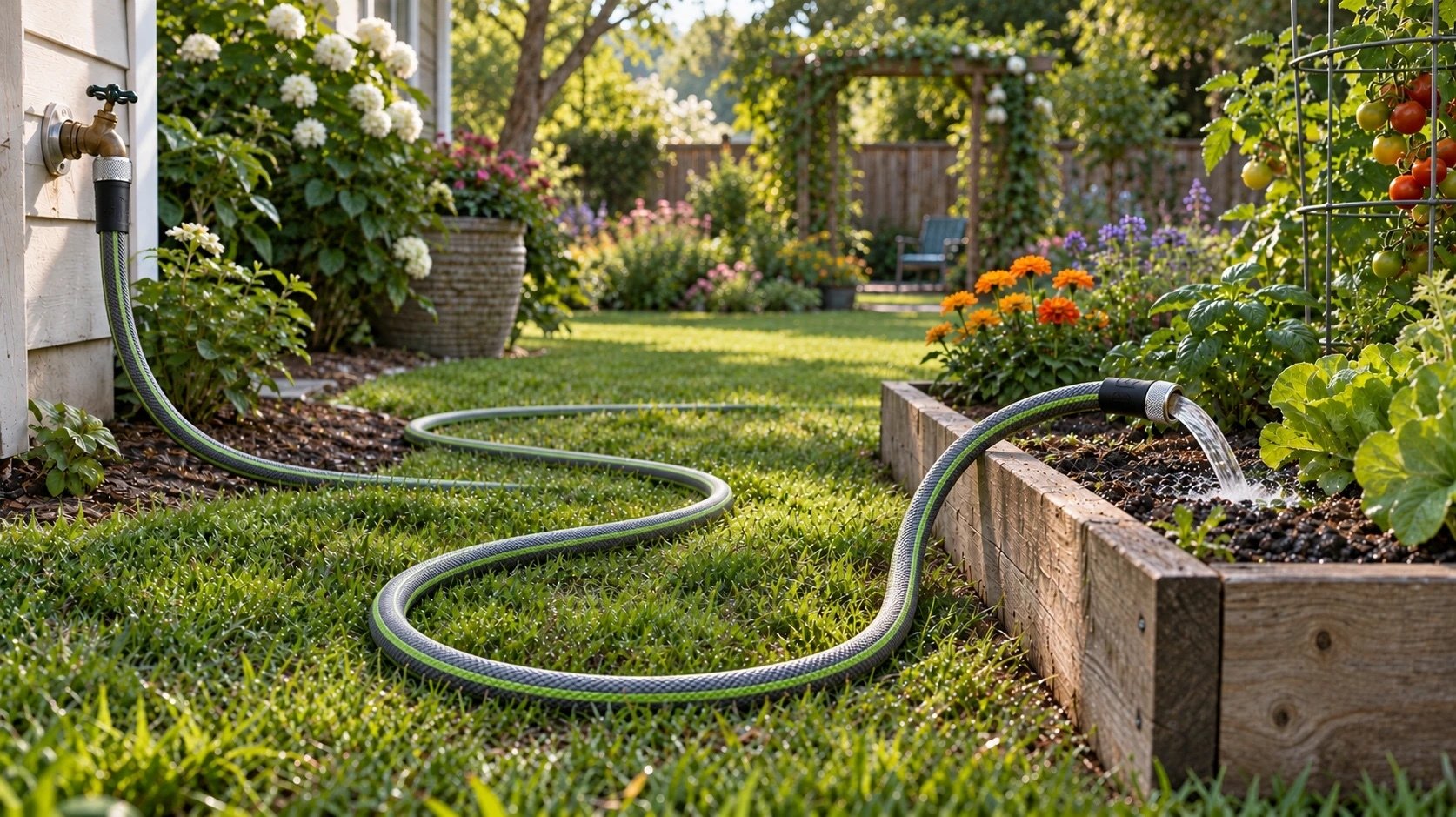
Gardening is a calming and rewarding hobby, but a garden hose that constantly kinks can frustrate even the most patient gardener. Every kink cuts off water flow, sends you walking back to untangle the line, and, over time, weakens the hose wall until it cracks or leaks. The good news is that kinking is rarely bad luck. It usually comes down to how the hose is built, how it is stored, and whether it is the right size for the job. Here is what causes kinks and how to choose a hose that won't let you down.
Why Hose Construction Matters
The most common reason a hose kinks is the way it is made. Inexpensive vinyl hoses tend to have thin walls that collapse when they bend, and they stiffen in cool weather, which makes kinks even more likely. Once a hose has kinked in the same spot a few times, it develops a "memory" and keeps folding there.
A better-built hose keeps its shape as it bends. Look for kink-resistant construction and a durable outer layer that resists abrasion and punctures. For example:
-
NeverKink Heavy Duty: Built with kink-resistant technology, crush-resistant couplings with female brass threads, and MicroShield anti-microbial protection against mold and mildew. It is rated at 340 PSI burst and is made in the USA with a lifetime guarantee.
-
zero-G: Uses a flexible Tru-Flex™ inner core that helps prevent kinking, wrapped in a high-density woven fiber jacket that resists leaks, abrasions, and punctures. It is up to 50% lighter than standard garden hoses and is rated at 600+ PSI burst.
To learn more about how materials affect performance, read Why Hose Material Matters More Than You Think.
Adopt Proper Storage Habits
Even a quality hose will kink if it is stored poorly. Coiling a hose while it is twisted, or wrapping it too tightly, locks bends into place that show up the next time you use it. Before coiling, lay the hose out straight and let it relax, then coil it in loose, even loops or wind it onto a reel. If you use a reel, drain the water first so the hose winds evenly. Storing your hose out of direct sun also helps it stay flexible longer. For more storage ideas, see our heavy duty water hose storage tips.
Select the Right Hose Length
A hose that is much longer than you need is harder to manage and more likely to twist and tangle. Measure the distance from your spigot to the farthest point you water, then choose a hose slightly longer than that measurement so you can move freely without stretching it.
Getting the length right also helps you water efficiently. According to Today's Homeowner, giving your lawn one inch of water takes a little over half a gallon per square foot, so a hose that delivers steady, uninterrupted flow makes a real difference. zero-G is available in 25, 50, and 100-foot lengths, and NeverKink Heavy Duty comes in lengths from 25 up to 130 feet.
When a Heavy-Duty or Commercial Garden Hose Makes Sense
If you water a large property, or you are a landscaper or groundskeeper who drags a hose across job sites every day, a standard residential hose may not hold up. A commercial garden hose is designed for that daily wear, with heavier construction, high burst strength, and crush-resistant couplings that survive being stepped on or run over. Products such as NeverKink PRO and zero-G PRO are built for professional use. Explore our full line of commercial garden hoses to compare options.
Choose a Hose That Keeps Water Moving
A hose that kinks less means less time untangling and more time enjoying your garden. Choose kink-resistant construction, store your hose carefully, and pick the right length for your space. Whether you are a weekend gardener or a professional who needs a heavy-duty hose, the right choice will keep your landscape lush and hydrated.
Find a retailer on our Where to Buy page or contact Apex Hose to find the right hose for you.


